

What is Calcined Alumina
Calcined alumina is considered one of the types of aluminum oxide (alumina). Sodium oxide is the primary impurity of this type of alumina. This material is normally heated to 1500℃in high-temperature furnaces and can extract chemically compounded hydroxide. Calcined alumina is normally the result of heating aluminum hydroxide and converting it to transition and alpha phases. This material has various types based on the distribution of particle size, grain size, degree of calcination or degree of temperature, and the amount of sodium oxide, and each of them is suitable for particular applications. Alumina Calcined is generally used in the manufacture of high-grade ceramic shapes, refractories and fused alumina abrasives. It can be compressed to produce a fired density of 3.8 or more. Amazingly, ceramic bodies containing 95% or more alumina are being employed to produce ceramic parts for a wide range industries (fired to 1400C or more).
Advantages of Calcined Alumina
High hardness and wear resistance
Calcined alumina oxide materials are known for their high hardness, which is comparable to that of diamond. This makes them highly resistant to wear, making them suitable for applications that require durable components.
Thermal stability
Calcined alumina oxide also exhibits excellent thermal stability. It retains its strength and hardness at high temperatures, a property that finds utility in industries such as metallurgy and electronics.
Electrical insulation
Alumina oxide is a good electrical insulator. It does not conduct electricity and is used in a variety of electronic applications to provide electrical insulation while also offering thermal conductivity.
-

Calcined alumina powder is using high quality aluminum hydroxide raw materials, the rotary kiln is used to calcinate at reasonable calcination temperature.
Add to Inquiry -
Low soda calcined alumina uses high quality raw materials, advanced production technology, the product has low sodium oxide, high conversion, excellent particle morphology and other advantages.
Add to Inquiry -
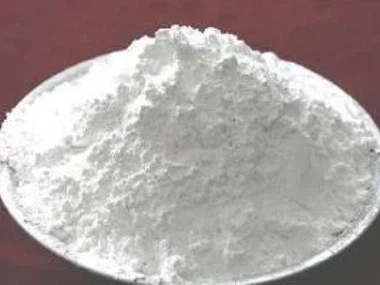
Fine powder calcined alumina appearance as white powder, good particle size distribution, low water demand, stable chemical properties.
Add to Inquiry -
Alpha high purity alumina appearance as white powdery, alumina purity reaches 99.99%, particle size uniformity, high purity, stable chemical properties, good crystal phase stability, γ and α crystal
Add to Inquiry -
High purity alumina powder could be defined as 4N and 5N purity products. It can be used as membrane coating for lithium battery, transparent ceramics, high-purity alumina, functional ceramics and
Add to Inquiry -
Ultra high purity alumina takes the high quality aluminum source as raw material, through inducing nucleating agent and inhibiting growth agent synergistic synthesis of ultrafine monodisperse
Add to Inquiry


Why Choose Us
Our Factory
Chalco has two production bases of Alumina chemicals: Chalco Shandong and Chalco Zhongzhou. Both plants possess the complete chain including mining, refining, processing, R&D, and manufacturing. Total capacity of Alumina chemicals has reached up to 1,200,000 tons per year.
Production Equipment
Both plants, Chalco Shandong and Chalco Zhongzhou, possess the complete chain including mining, refining, processing, R&D, manufacturing and logistics.
Our Product
Ordinary Aluminium Hydroxide, High Whiteness Aluminium Hydroxide for filler, Ultra Fine Aluminium Hydroxide, Zeolite, Calcined Alumina, Activated alumina, Pseudo-boehmite, Poly Aluminum Chloride.
Our Service
We create and develop solutions as per our client's demands on alumina chemicals.
Applications of Calcined Alumina Oxide

01
Abrasives and Polishing Media
Given its hardness and wear resistance, calcined alumina oxide is often used as an abrasive in grinding wheels and sandpaper. It is also an excellent polishing medium, producing high-luster finishes on a wide variety of materials.

02
Refractory Materials
The thermal stability of calcined alumina oxide makes it ideal for the production of refractory materials. These are used in high-temperature applications like kiln linings and in steel and glass manufacturing processes.

03
Electronic Components
In the electronics industry, calcined alumina oxide is used in a variety of components, including insulators, resistors, and substrates for semiconductor devices. Its electrical insulation properties and thermal conductivity make it particularly well-suited for these roles.

04
Biomedical Applications
Calcined alumina oxide’s biocompatibility and hardness also allow it to be used in biomedical applications. It is found in dental ceramics and is used as a biomaterial in hip replacements.
The Production Process of Calcined Alumina
Alumina Calcined is generally used in the manufacture of high-grade ceramic shapes, refractories and fused alumina abrasives. It can be compressed to produce a fired density of 3.8 or more. Amazingly, ceramic bodies containing 95% or more alumina are being employed to produce ceramic parts for a wide range industries (fired to 1400℃ or more).
Alumina has a very high melting temperature (about 2000℃) and alumina ceramics can maintain up to 90% of their strength above 1100C. They are thus employed in many refractory materials (i.e. Calcium Aluminate Cements have PCEs above cone 35) and used to make parts that must withstand high temperature.
Calcined (or alpha) alumina is made by calcining a source alumina powder at 1200-1300℃ to convert it to pure Al2O3. This is the densest and most stable crystalline form of alumina. It is insoluble in water but is soluble in hydrofluoric acid and potassium bisulfate. When nearly 100% of the material converts to the large hexagonal, elongated tablet shaped crystals associated with the alpha phase, the product is referred to as "Tabular Alumina". Unground calcined aluminas are typically 100-300 mesh, but much finer grades (often called "Ground Alumina") are produced by milling. Calcined aluminas are available in numerous grades based on the heat treatment applied, crystal size, soda content, and degree of thermal conversion to alpha phase. Soda content is a major factor in determining the final use (low soda materials are used for electronic applications, medium soda for electrical insulation and porcelains, high soda for glass, glaze, fiberglass and electrical porcelain).
Although it might seem logical to calculate a chemically equivalent substitute of alumina and silica for part of the kaolin in a recipe (i.e. to reduce glaze shrinkage in high kaolin recipes) this will likely not work unless the alumina is ground to micron sizes (very expensive). This is because the high melting temperature of the raw alumina, it will simply act as a matting agent. Notwithstanding this, alumina is added to glazes in the tile industry to impart matteness and texture (depending on particle size). In addition, for glazes that have alot of melt fluidity, an addition of pure calcined alumina powder can stabilize the melt while maintaining most of the visual effect.
Unlike hydrated alumina, the calcined material has no loss in weight on firing. Thus it produces no gases of decomposition.
Fired alumina ceramic parts can be harder than tungsten carbide or zircon, two to four times as strong as electrical porcelain, and very resistant to abrasion. Alumina is thus used in grinding media, cutting tools, high temperature bearings, and a wide variety of mechanical parts. Compared to zircon it has a high thermal conductivity and a higher thermal expansion.
Alumina (preferably in the calcined form) can be used in clay bodies as an aggregate and filler in place of quartz. This can increase the firing range, decrease quartz inversion firing problems, and increase hardness and whiteness in the fired body. However, alumina is much more expensive.
While there are various degrees of calcining, the materials used in ceramics (alpha-alumina) are made by calcining the powder at 1200-1300C to convert it to pure Al2O3 (when calcined near 2000C large hexagonal, elongated tablet-shaped crystals form as "Tabular Alumina"). The alpha form is the densest and most stable crystalline form. It is insoluble in water but is soluble in hydrofluoric acid and potassium bisulphate. Unground calcined aluminas are typically 100-300 mesh, but much finer grades (ground and reactive alumina) are produced by milling.
One common grade is 98% minus 325 mesh (45 microns) and 90% minus 12 microns. Another reactive grade has 1-micron particles! In addition to heat treatment and particle size calcined aluminas also distinguish themselves by crystal size, soda content, and degree of thermal conversion to alpha phase. Soda content is a major factor in determining the final use (low soda materials are used for electronic applications, medium soda for electrical insulation and porcelains, high soda for glass, glaze, fibreglass and electrical porcelain).
Some exceptionally fine 'super ground' grades can be made into casting slurries of very high specific gravity, they cast well with very low shrinkage (this is amazing since alumina powder is not a plastic material). Deflocculation can be achieved using a low pH (3.5-4.5) positive anion mechanism employing hydrochloric or nitric acid, a high pH (11-12) cation mechanism with alkali hydroxide salt additions, or with the addition of standard alkali polyelectrolyte dispersants. With the addition of organic binders, alumina bodies can be cast and pressed into a wide variety of shapes requiring heat and abrasion resistance. Alumina parts are then sintered to permit discrete crystals to react with each other to form larger ones.
Product Specifications
|
Type of Product |
MS 100 |
VLS6 |
M-MS1 |
M-LS1 |
M-VLS1 |
|
|
Al2O3* |
% |
min. 99.3 |
min. 99.7 |
min. 99.3 |
min. 99.5 |
min 99.7 |
|
Na2Ototal |
% |
max. 0.20 |
max. 0.05 |
max. 0.20 |
max. 0.10 |
max. 0.05 |
|
Fe2O3 |
% |
max. 0.05 |
max. 0.05 |
max. 0.05 |
max. 0.05 |
max. 0.05 |
|
SiO2 |
% |
max. 0.05 |
max. 0.05 |
max. 0.05 |
max. 0.05 |
max. 0.05 |
|
CaO |
% |
max. 0.05 |
max. 0.05 |
max. 0.05 |
max. 0.05 |
max. 0.05 |
|
Specific surface area (BET) |
m2/g |
75 |
6 |
0.4 |
0.5 |
0.6 |
|
Primary crystal size |
µm |
- |
- |
2.5 - 4.0 |
2.5 - 4.0 |
1.5 - 2.5 |
|
Average particle size d50 |
µm |
80 |
80 |
70 |
70 |
70 |
|
Bulk density |
kg/m3 |
1000 |
1100 |
850 |
900 |
900 |
How To Select Wear-Resistant Calcined Alumina
Wear-resistant Calcined Alumina are special corundum ceramics made of Al2O3 as the main raw material, rare metal oxides as flux, and fired at a high temperature of 1700 degrees, and then combined with special rubber and high-strength organic/inorganic binders. The product.
Now alumina wear-resistant ceramics have spread all over the market and are widely used in steel, coal, thermal power, cement, smelting and other industries.

The hardness of wear-resistant ceramics
Generally used in various equipment, people choose more wear-resistant ceramic sheets, which are directly attached to the surface of the equipment to protect the equipment from wear and tear. Due to the small size of the ceramic sheet, it can be flexibly applied to various shapes of equipment. Ceramics with different hardness are used for different equipment, which should be determined according to the working conditions.
Wear resistance
In special working conditions, more wear-resistant ceramics are required, such as ZTA toughened alumina ceramics. ZTA toughened alumina ceramics is based on the addition of certain zirconia ceramic ingredients on the basis of alumina. The wear resistance and toughness are between alumina ceramics and zirconia ceramics. ZTA ceramics have better wear resistance than 95% alumina ceramics. it is good.

Working temperature
Secondly, the working temperature of the equipment must be considered, which determines the choice of the installation method of wear-resistant ceramics to ensure that the wear-resistant ceramics can not fall off under high temperature conditions. If it is a bulk material transportation, it is also necessary to evaluate the impact strength based on factors such as material properties, particle size, drop, erosion angle, etc., to ensure the selection of suitable wear-resistant ceramics.
Application of Calcined Alumina
Electronics and semiconductors: Calcined alumina's excellent electrical insulating properties and high thermal conductivity make it an ideal choice for applications in the electronics industry. It is widely used as a substrate material for integrated circuits (ics) and as an insulating layer in electronic components, such as capacitors and resistors. Alumina's ability to withstand high temperatures and harsh environments makes it valuable for creating durable electronic components.
Catalysis: Calcined alumina serves as a catalyst support material in various chemical processes. Its high surface area and porous structure make it an effective substrate for catalytic reactions. In the petroleum industry, alumina catalysts are employed in processes like hydrocracking and fluid catalytic cracking to convert crude oil into valuable products like gasoline and diesel.
Ceramics and refractories: Calcined alumina's exceptional hardness and resistance to high temperatures make it a cornerstone material in ceramics and refractory applications. It is used to produce ceramics for cutting tools, wear-resistant components, and thermal insulators. Additionally, alumina's use in refractories contributes to the construction of furnaces, kilns, and other high-temperature industrial equipment.
Medical implants: The biocompatibility of calcined alumina has led to its use in medical applications, particularly in the production of orthopedic implants such as hip joints and dental crowns. Its inertness within the human body, combined with its durability and resistance to corrosion, makes it an excellent choice for long-lasting medical devices.
Abrasive and polishing applications: Calcined alumina's hardness and abrasive properties are harnessed in various industries for cutting, grinding, and polishing applications. It is used to manufacture sandpapers, grinding wheels, and abrasive discs, playing a crucial role in processes that require precision and smooth surface finishes.
Optics and laser technology: Transparent alumina, also known as synthetic sapphire, is used in optical applications due to its excellent optical clarity and high transmission in the visible and near-infrared regions. Synthetic sapphire windows and lenses find use in lasers, cameras, and optical sensors.
Environmental protection: Calcined alumina-based products contribute to environmental protection efforts in various ways. For instance, alumina-based filters are employed in water treatment processes to remove impurities and contaminants from drinking water. In air purification systems, alumina serves as an adsorbent to capture pollutants and improve indoor air quality.
Automotive industry: Calcined alumina's heat resistance and wear properties make it suitable for automotive components that require durability and performance under high-stress conditions. It is used in parts such as spark plug insulators, catalytic converter substrates, and bearings.
Abrasives and cutting tools: Calcined alumina-based abrasives, such as alumina-coated sandpapers and cutting tools, are widely used in the construction and manufacturing sectors. These tools are essential for shaping, smoothing, and refining surfaces in various materials.
FAQ
We're professional calcined alumina manufacturers and suppliers in China, specialized in providing high quality customized service. If you're going to wholesale high-grade calcined alumina with competitive price, welcome to get free sample from our factory.
hpa alumina, Alpha High Purity Alumina, alpha al2o3