

Molecular sieve zeolite is artificially prepared zeolites which are sodium, potassium or calcium aluminosilicates. Of the range of molecular sieves available, only 5A and 13X are in common use and have pore diameters that are of the same order as the dimensions of small molecules. For this reason both molecular sieves 5A and 13X are used primarily for the separation of low molecular mass inorganic gases and hydrocarbons which can penetrate the pores. The reason for choosing one or the other will depend on the precise nature of the separation. The molecular sieves exhibit variable retention behaviour, depending on the extent of activation and the carrier gas and must be treated to remove active sites to achieve the successful separation of reactive gases. There may also be significant differences in behaviour between batches of the same molecular sieve. The separating power of molecular sieves can slowly deteriorate because of adsorption of water from carrier gas or from samples.
Advantages of Molecular Sieve Zeolite
By weight, they adsorb a significant amount of gasses and liquids due to their well-defined pore structures.
They can selectively adsorb specific molecules based on size, shape, and chemical properties, allowing for precise separation and purification.
Adsorption capability can be regenerated by removing adsorbed substances through controlled heating or vacuum treatments, extending the materials’ lifespans and reducing replacement costs.
They are stable under a wide range of temperatures and chemical environments, making them suitable for various industrial processes.
They contain well-defined and controllable pore sizes, enabling precise control over the types and sizes of molecules that can be adsorbed.
-

3A molecular sieve desiccant, zeolite type 3A, 3A zeolite molecular sieve, molecular Sieves is made by perfect crystallization 3A zeolite with special process, which has excellent choice adsorption,
Add to Inquiry -
Zeolite 5A molecular sieve, zeolite type 5A, molecular Sieves is made by perfect crystallization 5A zeolite with special process, which has excellent choice adsorption, deep dry, extreme drying
Add to Inquiry -
NaY zeolite, Y zeolite catalyst, molecular Sieves is made by perfect crystallization NaY zeolite with special process, which has excellent choice for petrochemical industry, as catalytic cracking and
Add to Inquiry -
Zeolite 13X powder, zeolite 13X molecular sieve, zeolite 13X for oxygen concentrator is widely used in the drying, cleaning, separation and purification of gas, liquids and organics.
Add to Inquiry


Why Choose Us
Our Factory
Chalco has two production bases of Alumina chemicals: Chalco Shandong and Chalco Zhongzhou. Both plants possess the complete chain including mining, refining, processing, R&D, and manufacturing. Total capacity of Alumina chemicals has reached up to 1,200,000 tons per year.
Production Equipment
Both plants, Chalco Shandong and Chalco Zhongzhou, possess the complete chain including mining, refining, processing, R&D, manufacturing and logistics.
Our Product
Ordinary Aluminium Hydroxide, High Whiteness Aluminium Hydroxide for filler, Ultra Fine Aluminium Hydroxide, Zeolite, Calcined Alumina, Activated alumina, Pseudo-boehmite, Poly Aluminum Chloride.
Our Service
We create and develop solutions as per our client's demands on alumina chemicals.
Importance of Molecular Sieve Zeolite
Molecular sieve zeolite is a remarkable crystalline material with tiny, uniform pores that distinguishes it from other adsorbents. Its ability to selectively absorb specific molecules based on their size and shape makes it an indispensable tool in processes such as gas separation, purification, and dehydration.
The term “molecular sieve” reflects the microscopic sieving action that takes place within the material. Zeolite molecular sieve’s porous structure effectively sorts molecules, ensuring that only certain substances are allowed to pass through while others are trapped within its network.
Moreover, the unique composition of zeolite molecular sieve enables it to perform tasks beyond simple filtration. Its exceptional adsorption capabilities make it highly effective in removing impurities and unwanted components from various substances.
The intricate design of zeolite molecular sieve makes it a reliable and long-lasting solution for numerous industrial processes. Unlike traditional adsorbents, it maintains its structure and functionality even under demanding conditions, providing consistent and efficient performance over time.
Through the application of zeolite molecular sieve, industries can achieve higher purity levels in their products, enhance process efficiency, and ensure compliance with regulatory standards making it an integral component in maintaining quality and reliability across various manufacturing processes.
This fascinating material plays a pivotal role in achieving precise separation, purification, and dehydration across a wide range of industrial applications. By leveraging these unique properties and capabilities, companies can optimize their production processes, reduce waste, and enhance overall product quality.
Structure and Characteristics of Molecular Sieve Zeolite


Molecular sieve zeolite has a unique crystalline structure that distinguishes it from other adsorbents, contributing to its extensive range of uses and applications.
The regular, uniform pore structure formed by interconnected channels and cages is what makes molecular sieve zeolite so special. These tiny channels are just the right size for certain molecules to fit through, while blocking others—a microscopic gatekeeper, carefully allowing specific guests to enter while keeping unwanted ones out.
Lon exchange capacity
●In addition to its unique crystalline structure, molecular sieve zeolite possesses an impressive ion-exchange capability. It means it can swap certain ions within its structure for others in a solution. This allows for the modification of its properties, making it highly adaptable for specific applications and processes—akin to a chameleon, able to transform itself to suit different industrial needs.
●For instance, in gas dehydration processes, molecular sieve zeolite with high affinity for water molecules can efficiently remove moisture from natural gas or other gases, ensuring that the end product meets stringent quality requirements. This ion-exchange capacity enables the customization of adsorbents to meet the exact needs of diverse industries, making them invaluable across a multitude of applications.
●These unique characteristics make molecular sieve zeolite an indispensable tool in various industries, revolutionizing purification, separation, and adsorption challenges.
●By understanding these structural nuances and characteristics, we can appreciate why molecular sieve zeolite is a preferred choice for precise separations and targeted adsorption across different industrial processes. The next time you encounter products purified using this incredible material, you’ll know the science behind its exceptional performance.
●Molecular sieve zeolite possesses remarkable properties that set it apart from other materials. One of its most noteworthy features is its exceptional adsorption capacity. When we talk about adsorption, we're describing the way that zeolite can attract and trap molecules on its surface. This material has a strong affinity for water, carbon dioxide, and other polar molecules, making it incredibly efficient in dehydration and purification processes across various industries.
Thermal stability
Another key characteristic of molecular sieve zeolite is its outstanding thermal stability. This means that even when exposed to high temperatures, the structure and performance of zeolite remain intact. Such resilience makes it an ideal choice for applications involving heat and pressure, ensuring durability and reliability even under demanding conditions.
Versatility
●The versatility of molecular sieve zeolite in industrial applications cannot be overstated. Its high adsorption capacity and excellent thermal stability make it an invaluable component in processes such as natural gas refining, air separation systems, renewable fuels production, and industrial drying applications. From removing impurities in hydrocarbon streams to enabling the production of highly purified gases like nitrogen and oxygen, zeolite plays a vital role across multiple industries.
●What makes this material truly remarkable is its ability to enhance the efficiency and reliability of critical industrial processes without compromising on performance—even in the most challenging environments.
Activation and Preparation of Molecular Sieve Zeolite
Activating zeolite molecular sieve is crucial to ensuring optimal performance. This involves a thermal treatment to eliminate any trapped water or impurities within its structure, setting the stage for its powerful adsorption capabilities in various industrial applications.
The activation process consists of controlled heating to drive off water within its pores. This step is critical to remove unwanted moisture without compromising its structural integrity. Surface modification via chemical treatments further enhances the molecular sieve’s performance in diverse applications by altering surface properties to introduce specific functional groups, thereby enhancing its affinity for particular molecules.
These modifications provide a way to customize the performance of zeolite molecular sieves based on specific application requirements, akin to fine-tuning an instrument to produce harmonious notes—each modification is designed to enhance its adsorption properties for targeted molecules. For instance, in the petrochemical industry, surface modifications can improve its ability to selectively adsorb specific contaminants from hydrocarbon streams, ensuring compliance with stringent purity requirements.
By tailoring the surface properties through chemical treatments, we can unlock new potentials for zeolite molecular sieve in diverse fields such as air separation, natural gas refining, renewable fuels production, and petrochemical processes. This intricate process relies on a deep understanding of molecular interactions and material science an artful fusion of chemistry and engineering expertise.
Role of Molecular Sieve Zeolite in Catalysis
Zeolites are more than just molecular sieves; they are remarkable catalysts unlocking the potential for efficient and selective chemical reactions. Their porous structure and adjustable pore size make them highly desirable as catalysts in various industrial processes. When it comes to catalysis, zeolites excel at providing active sites for chemical reactions, enabling precise control over the shape and size of molecules that can enter their framework. In doing so, zeolite molecular sieves act as gatekeepers, determining which molecules can participate in a reaction based on their size and shape.
This selectivity is particularly evident in processes such as hydrocracking, isomerization, and selective oxidation, where controlling the pathways of complex chemical reactions is crucial for achieving high product yields and desired selectivity. For example, in hydrocracking—the process of breaking down large hydrocarbon molecules into smaller, more valuable ones—zeolites’ shape-selective properties guide the formation of specific hydrocarbon products by allowing only certain molecules to access their internal structure.
Moreover, in isomerization—a process that transforms one molecule into another with the same atoms but arranged differently—zeolite catalysts play a vital role in steering the reaction towards the formation of the desired isomers. Similarly, in selective oxidation, which involves chemically transforming a substance through the addition of oxygen, zeolites facilitate the production of target compounds by channeling specific molecules through their unique pore structure.
Just as a master sculptor meticulously shapes clay to craft a specific form, zeolites sculpt chemical reactions to yield precise products with enhanced selectivity and efficiency. This ability to fine-tune reaction paths to favor desired outcomes is what makes zeolite molecular sieves indispensable tools in the realm of catalysis.
By harnessing the power of shape-selective catalysis, zeolite molecular sieves elevate reaction efficiency and product selectivity while paving the way for sustainable and optimized industrial processes.
Dehydration: This is the process of removing water molecules from liquids or gases. It is important in industries like natural gas processing to prevent ice and corrosion.
Gas Separation: This involves separating different gases based on their molecular sizes. Molecular sieves zeolite allow air separation units to produce high-purity oxygen, nitrogen, and other gases.
Air Drying: Like dehydration, this is done to prevent corrosion and improve product quality. It is common in compressed air systems and industrial applications that need dry air.
Adsorbent Beds: Full beds of adsorbent materials help purify hydrogen in refineries.
Insulating Glass: The air inside double-pane windows should be free of humidity to prevent condensation and enhance thermal insulation.
Refrigerant Drying: Moisture can cause damage if it infiltrates refrigerant lines. Refrigeration and air conditioning systems operate efficiently over longer lifespans if any water is judiciously removed.
Ethanol Production: Water and impurity removal is part of the ethanol purification process. An adsorbent step is important to biofuel production and quality assurance.
How To Properly Use Molecular Sieves Zeolite
Choose the molecular sieve zeolite based on the specific application, considering factors like pore size and adsorption capacity.
If the molecular sieve zeolite has been stored for an extended period, precondition it by heating or placing it under vacuum to remove any adsorbed moisture.
Create a bed or layer of molecular sieve zeolite in the adsorption system, distributing it evenly to maximize contact with the target substance.
Operate the system within the sieve material’s recommended temperature range; some types work optimally at specific temperatures.
Regularly monitor the adsorption performance using appropriate indicators or instruments to determine when the molecular sieve zeolite needs regeneration or replacement.
When the molecular sieve zeolite reaches its adsorption capacity, initiate the regeneration process by either heating or applying a vacuum to remove the adsorbed substances.
Prevent exposure to contaminants that may interfere with the adsorption process.
Keep the adsorption system properly sealed to prevent the entry of ambient moisture or other contaminants.
Periodically replace the molecular sieve zeolite material based on its lifespan and performance degradation.
What Is the Difference Between a Molecular Sieve Zeolite and Silica Gel
Molecular sieves zeolite and silica gel are both desiccants. This means they are used to absorb and remove moisture from a closed environment. However, there are differences between them such as:
Silica gel is a porous form of silica dioxide, typically synthesized into small granules or beads. It has a high surface area with numerous microscopic pores that absorb moisture molecules. Molecular sieves zeolite, on the other hand, are crystalline metal aluminosilicates with uniform and precisely sized pores. They are available in various types, such as zeolites, which have specific pore sizes to selectively adsorb certain molecules while excluding others.
Silica gel has a wide range of pore sizes, making it effective for adsorbing a variety of molecules, including water vapor. However, it is less selective compared to molecular sieves zeolite. Meanwhile, molecular sieves zeolite have well-defined and uniform pore sizes, allowing for greater selectivity in adsorption. Different types of molecular sieves can be chosen based on the size and type of molecules to be adsorbed.
Silica gel has a high adsorption capacity for moisture, making it suitable for a wide range of applications. Molecular sieves zeolite, on the other hand, typically have a higher adsorption capacity for specific molecules due to their selective pore sizes, making them more efficient in certain applications.
Silica gel can be regenerated by heating it to remove absorbed moisture, making it reusable. Meanwhile, molecular sieves zeolite can also be regenerated through heating, but the process may vary depending on the specific type of sieve and the molecules adsorbed.
3A
3A molecular sieve is a crystalline aluminosilicate with 3-angstrom pore openings. It selectively adsorbs water molecules. 3A is perfect for removing water from gases and liquids, so it’s central to some dehydration processes.
Compared to 4A molecular sieves, 3A has smaller pores, enabling the removal of water and other smaller molecules while excluding larger ones. This distinction is crucial in applications where precise molecular size exclusion is required. Natural gas drying and ethanol dehydration are prominent examples.
4A
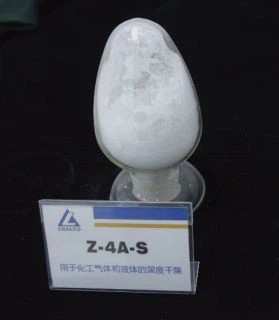
4A molecular sieve is a crystalline aluminosilicate whose pores measure 4 angstroms in size. This specific pore size allows it to selectively adsorb molecules smaller than 4A, making it particularly useful for dehydration purposes.
In natural gas and air compression systems, 4A molecular sieve material effectively removes water molecules, preventing corrosion and ice buildup. Its functionality relies on the preferential adsorption of water over larger molecules.
Like 3A and 5A Molecular Sieves, the 4A variant's unique pore size positions it as an ideal adsorber of certain types of molecules, including, but not limited to water.
5A
5A molecular sieve possesses crystalline aluminosilicate structures with 5-angstrom pores. This specific pore size allows for the selective adsorption of molecules smaller than 5A, making it ideal for separating certain gases and purifying liquids.
Its application often involves removing impurities such as water, carbon dioxide, and hydrogen sulfide from various gas streams. In comparison to 4A and 3A molecular sieves, the 5A variant's larger pore size expands its utility, especially in gas purification and dehydration processes across industries.
13X
13X molecular sieve material is characterized by its crystalline aluminosilicate structure featuring 13-angstrom pores. This large pore size enables the selective adsorption of molecules smaller than 13A.
Its predominant use lies in the separation of nitrogen from oxygen in air, as well as in the dehydration of natural gas and other hydrocarbons. This molecular sieve preferentially adsorbs moisture and other impurities from gases made of larger molecules.
When compared to smaller-pored molecular sieves like 4A and 5A, the 13X variant stands out for its versatility in handling larger molecules, contributing to its unique industrial value.
FAQ
We're professional molecular sieve zeolite manufacturers and suppliers in China, specialized in providing high quality customized service. If you're going to wholesale high-grade molecular sieve zeolite with competitive price, welcome to get free sample from our factory.
zeolite 13x powder, Zeolite 5a, 3a zeolite molecular sieve